CBSE Class 6–10 Syllabus 2026-27: A Complete Chapter-Wise Guide for Every Subject
A parent-friendly breakdown of the CBSE syllabus 2026-27 for Classes 6 to 10 — how it's structured, what's changed, and how to actually plan around it instead of panicking about it.
5 min read · Article 01 of 20
Every year, around the same time, the same message lands in parent WhatsApp groups: "Has anyone downloaded this year's CBSE syllabus yet?" And every year, it triggers the same quiet panic — not because the syllabus itself is a mystery, but because nobody has the time to sit down, open a 40-page PDF, and actually make sense of it.
This guide exists to solve that problem. We're going to walk through what the CBSE syllabus for 2026-27 looks like across Classes 6 to 10, how it's organized, what's changed under NEP 2020, and — more importantly — how a parent or student can turn a syllabus document into an actual study plan instead of a source of anxiety.
Why the CBSE Syllabus Feels Different Now
If you went to school more than a decade ago, the word "syllabus" probably meant a fixed list of chapters you memorised and reproduced in an exam. That's changing, and it's changing fast.
Under the National Education Policy (NEP) 2020, CBSE has been steadily shifting its curriculum and its exam pattern away from rote recall and toward what's called competency-based learning — questions that test whether a child can apply a concept, not just remember it. For Class 10 in particular, a large share of board exam questions are now case-study and application-based rather than direct recall. That single shift changes what "studying the syllabus" should actually look like at home.
It also means the syllabus document itself is no longer just a table of contents. It usually specifies:
- The chapters and units for each subject
- The learning outcomes expected from each unit
- The weightage (marks) assigned to each unit
- Any deleted or rationalised topics for that academic year
Skipping straight to "which chapters are there" without noticing the weightage is one of the most common mistakes families make — more on that below.
How the Syllabus is Structured, Class by Class
Classes 6–8 (Middle School) At this stage, the CBSE syllabus is built around foundation-building rather than exam pressure. Mathematics moves from arithmetic into early algebra and geometry; Science splits conceptually into Physics, Chemistry, and Biology themes even though it's taught as one subject; Social Science covers History, Geography, Civics, and increasingly, Economics basics. The absence of board exams at this level is exactly why many students under-invest here — and exactly why the gaps show up two years later in Class 9 and 10.
Class 9 (Foundation Year) Class 9 is where the syllabus starts mirroring the depth of the board years, even though there's no public board exam yet. Schools conduct their own final exams, but the content — especially in Maths and Science — is deliberately harder, because it lays the groundwork Class 10 assumes you already have. A student who coasts through Class 9 usually pays for it in Class 10.
Class 10 (Board Year) This is the syllabus families obsess over, and for good reason. Each core subject — Maths, Science, Social Science, English, and the second language — is assessed out of 100 marks, split as 80 marks for the theory paper and 20 marks for internal assessment through the year. CBSE has also moved to a twice-a-year board exam system: a compulsory exam (typically February–March) and an optional improvement exam (typically May) where students can reattempt select subjects and the better of the two scores is counted. This is designed to lower the stakes of a single bad exam day — but it only helps students who understand the system well enough to use it strategically, not as a safety net for skipping preparation the first time.
Subject-Wise Things Worth Knowing
Mathematics — Offered at two levels for Class 10 (Standard and Basic), which matters if your child is considering Science or Commerce in Class 11. The syllabus leans heavily on Algebra, Geometry, Trigonometry, and Statistics — areas where consistent practice matters far more than last-minute revision.
Science — Integrates Physics, Chemistry, and Biology into one subject, but the exam paper tests all three with roughly equal weight. A common mistake is spending 70% of study time on Biology because it feels "easier to read" while Physics numericals quietly become the weak spot.
Social Science — Often the most under-prepared subject because it's assumed to be "just reading." In reality, current Social Science papers include map-based questions and source-based case studies that need practice, not just memory.
English — Increasingly assesses comprehension, inference, and writing skills over grammar drills in isolation. Reading widely, even outside the textbook, genuinely helps here.
How to Actually Use the Syllabus (Not Just Download It)
- 01Start with weightage, not chapter order. Identify which units carry the most marks and prioritise them first — this alone changes how a study plan should be built.
- 02Separate "board year" subjects from "foundation year" subjects. Classes 6–8 need conceptual clarity; Classes 9–10 need conceptual clarity plus exam-pattern practice.
- 03Track deletions and revisions every year. CBSE periodically rationalises syllabi — studying an old chapter that's been dropped wastes real time.
- 04Match study format to subject type. Numerical subjects (Maths, Physics) need repeated practice; conceptual subjects (Biology, Social Science) benefit more from visual explanation and revision through retrieval, not just re-reading.
That last point is where most traditional study routines quietly fail. A child re-reading a Geography chapter for the fourth time isn't struggling with effort — they're struggling with a format that doesn't fit how the subject needs to be learned.
Where Sparkfinity Fits In
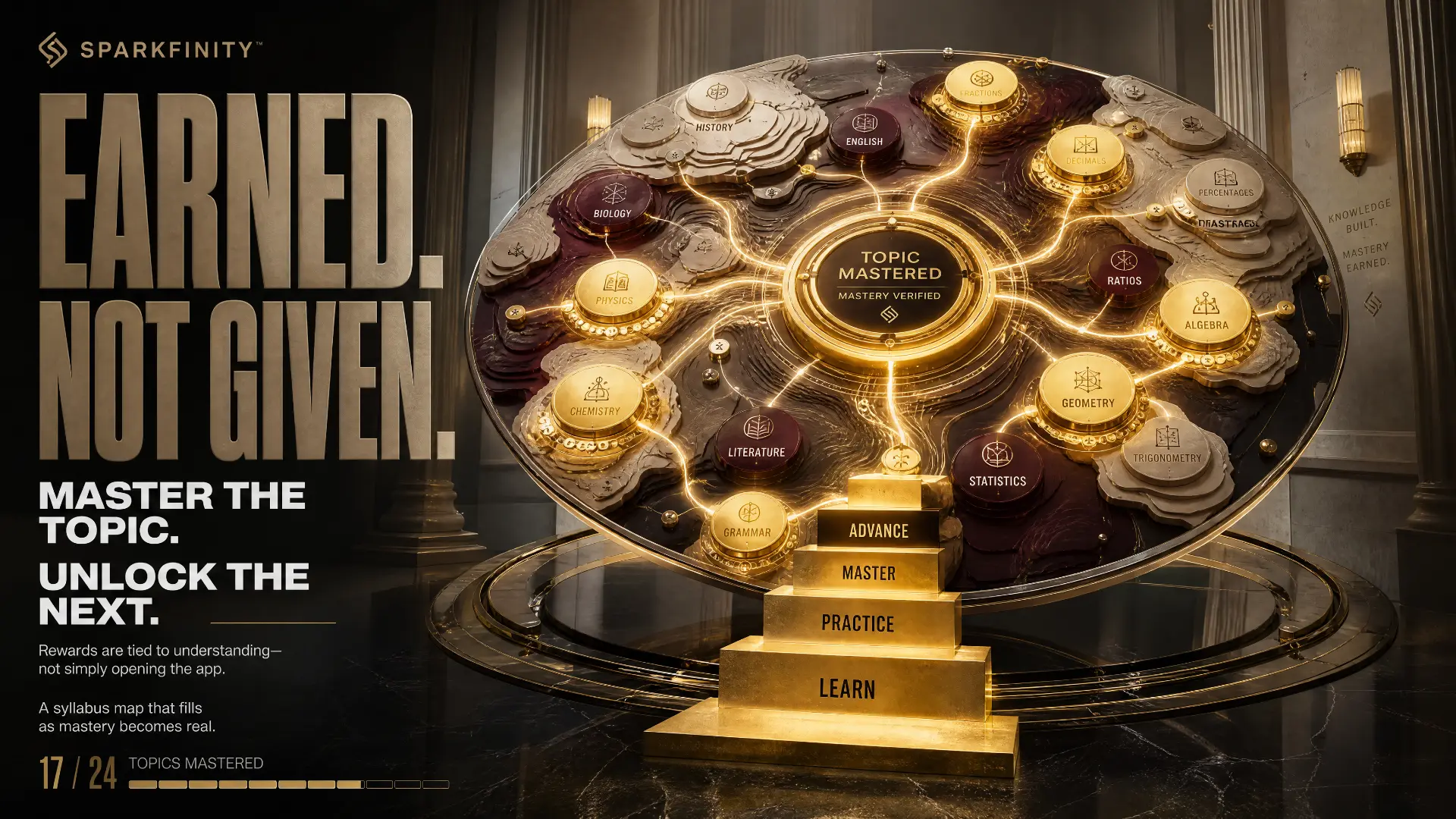
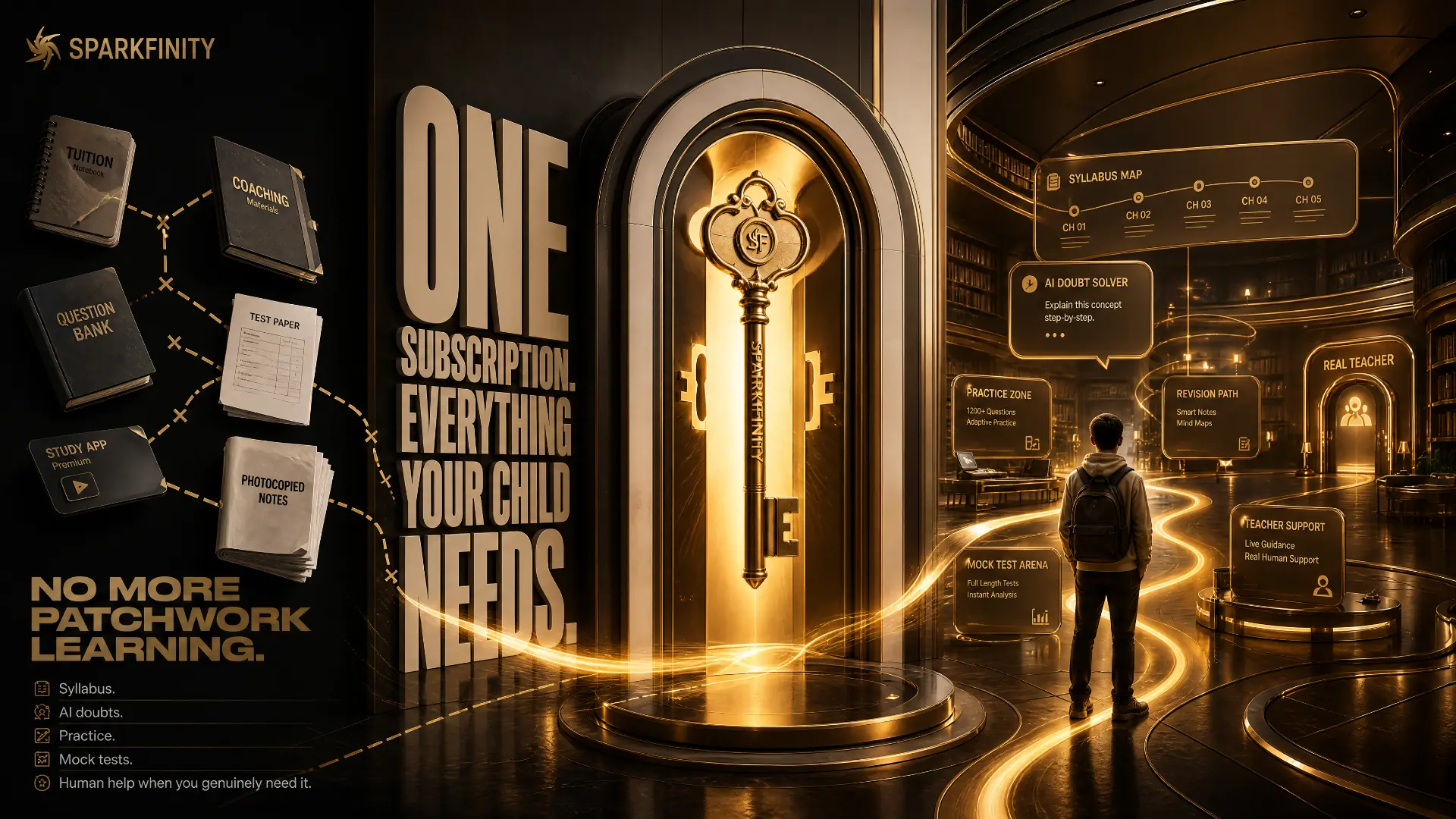
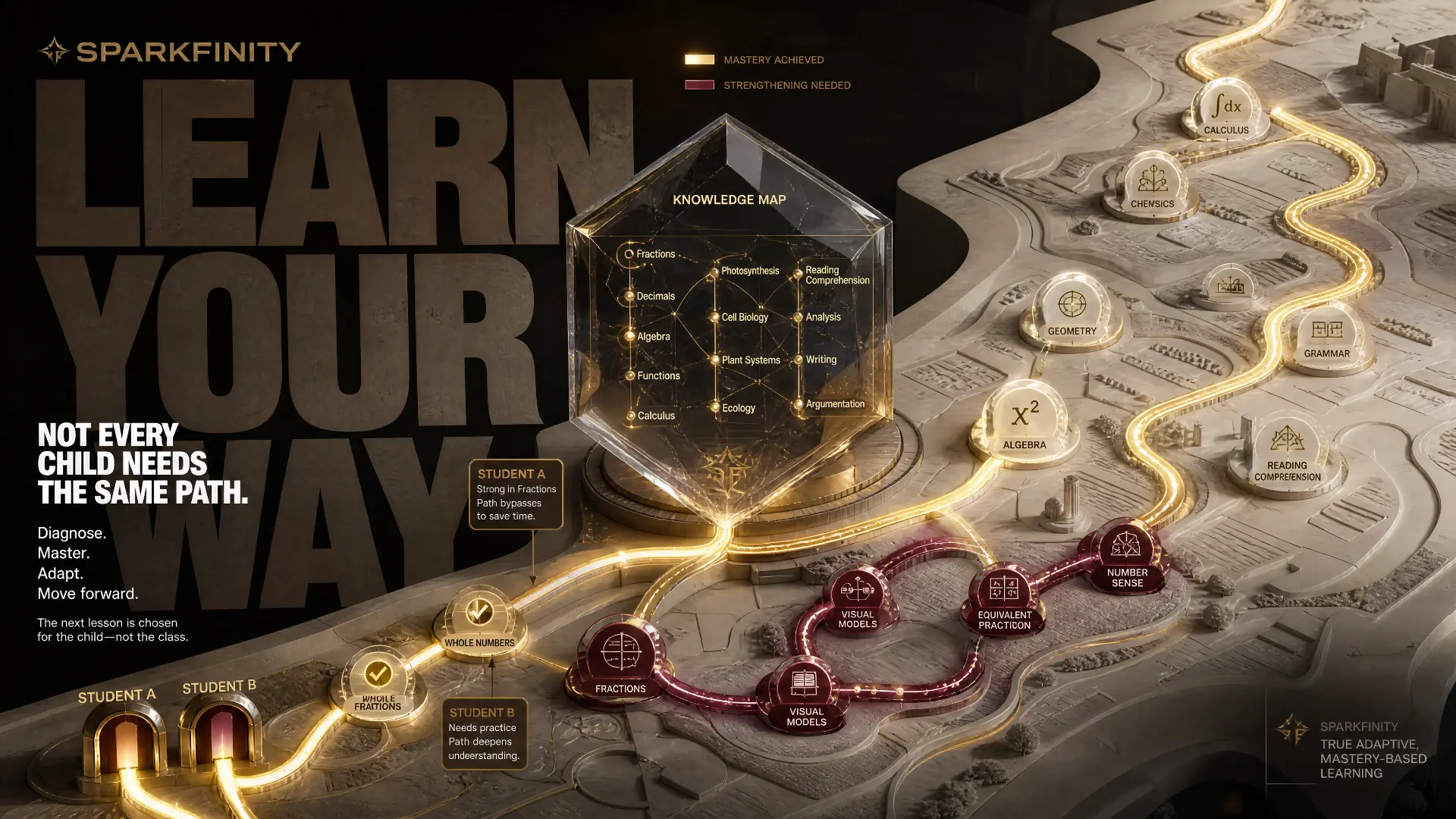
This is exactly the gap Sparkfinity was built to close. Instead of static PDFs and one-size-fits-all notes, Sparkfinity turns the CBSE syllabus — chapter by chapter, Class 6 to 10 — into AI-taught video lessons, adaptive flashcards, and notebook-style tools that adjust to how each child is actually learning, not just what chapter they're on. The syllabus stays exactly the same. How your child experiences it doesn't have to.
If the goal is Learn Better. Remember Longer. Score Higher. Enjoy Learning. — it starts with turning this syllabus from a PDF nobody reads twice into a plan a child can actually follow.
Frequently Asked Questions
Is the CBSE syllabus the same across all schools? Yes — CBSE prescribes a common syllabus nationally, though individual schools may pace chapters differently across the academic year based on their own calendar.
Where can the official CBSE syllabus be downloaded from? The official, updated syllabus for every class and subject is published on cbseacademic.nic.in. It's worth checking directly each year rather than relying on shared PDFs, since minor revisions are common.
Does Class 10 Maths Basic differ from Maths Standard in syllabus content? The core syllabus overlaps significantly, but Maths Standard includes some additional and more challenging topics, and only Standard-level Maths keeps the door open for Science and Commerce streams that require Maths in Class 11.
How early should a family start planning around the syllabus? Ideally at the start of the academic year rather than a few months before exams. Early planning allows time to build genuine understanding of higher-weightage units instead of compressing everything into last-minute revision.
Next step
Turn this into a plan for your child.
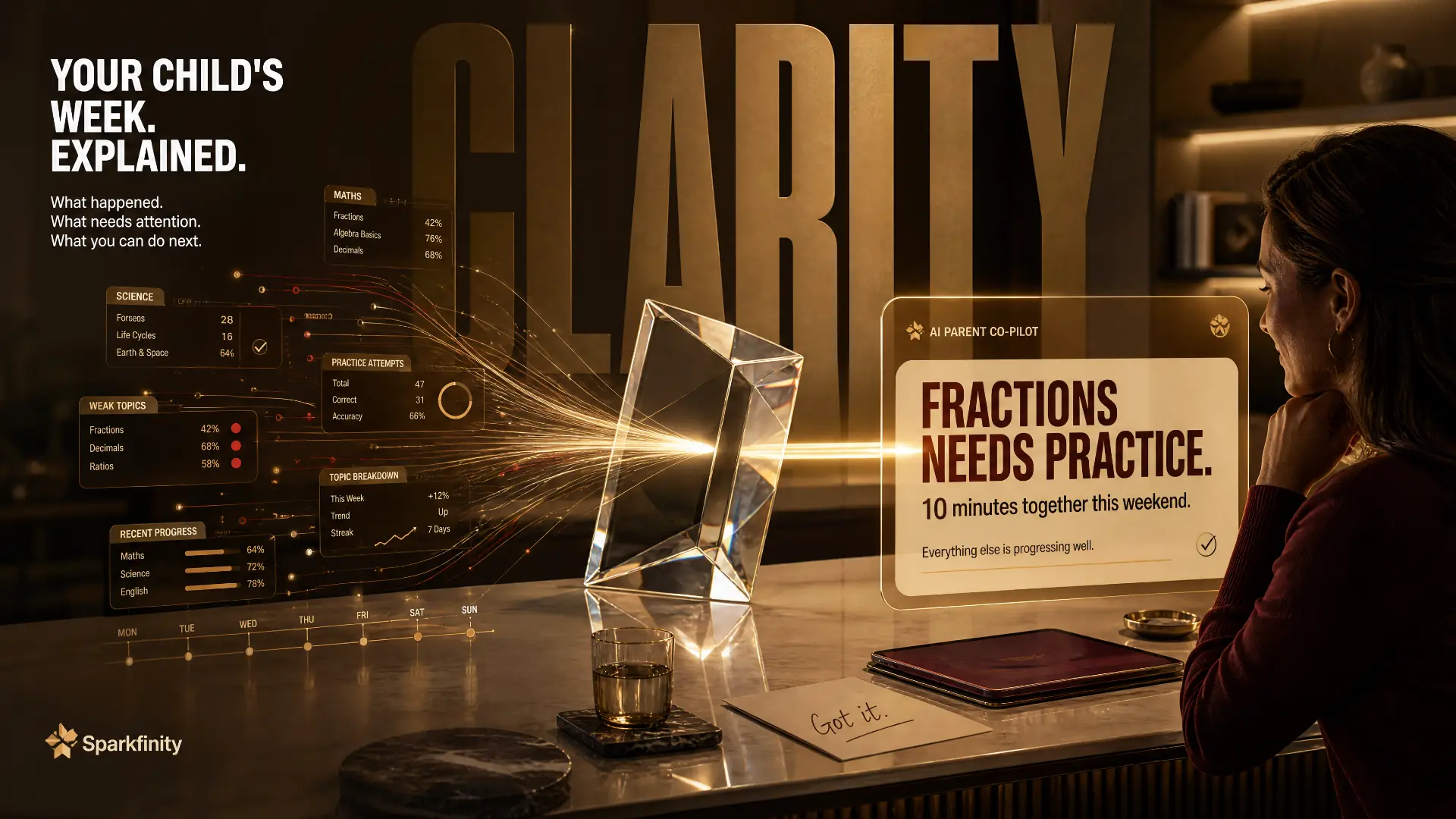
Two live classes a week, an AI tutor that remembers every weak topic, and a weekly parent update in plain language — ₹3,999 a month.
Continue exploring
Everything on Sparkfinity AI is one or two clicks away.
- All 14 FeaturesEvery capability in the Sparkfinity learning system.Open→
- Pricing₹3,999 a month — two live one-hour AI Basics classes each week.Open→
- How It WorksDiagnose, teach, test, retest — the loop behind every class.Open→
- FAQ28 answers on classes, safety, syllabus and pricing.Open→
- Contact UsTalk to us on WhatsApp, phone or email and book a seat.Open→