Why Rote Learning Is Failing Indian Students — And What Works Better
A clear-eyed look at why memorisation-heavy study habits are increasingly failing students under newer exam patterns, and what genuinely works instead.
5 min read · Article 17 of 20
For generations, "studying hard" in India often meant one thing in practice: reading a chapter repeatedly, memorising definitions and answers, and reproducing them as accurately as possible in an exam. It worked, to a point, for a long time — largely because exams themselves rewarded recall. That's changing, and a lot of well-intentioned, hardworking students are being caught off guard by the shift.
What Rote Learning Actually Is (and Isn't)
Rote learning means memorising information — facts, definitions, procedures — without necessarily understanding the underlying concept or being able to apply it in an unfamiliar context. It's not inherently useless: some things genuinely benefit from memorisation (multiplication tables, key formulas, specific dates). The problem isn't memorisation itself. It's relying on memorisation as the primary study strategy for content that actually requires understanding to be usable.
Why It Used to "Work" Reasonably Well
Older exam formats leaned heavily on direct recall — define this term, state this law, reproduce this derivation exactly as taught. In that kind of exam, memorising the "correct" answer word-for-word was a genuinely effective, if shallow, strategy. Students who were skilled at memorisation could score well without necessarily understanding why an answer was correct.
Why It's Failing Students Now
CBSE, in line with NEP 2020, has been steadily shifting exam papers toward competency-based questions — a substantial share of current Class 10 papers tests application, analysis, and reasoning in unfamiliar scenarios, not direct recall of textbook content. A student who memorised "the correct answer" to a familiar-looking question, without understanding the underlying concept, often struggles badly when the same concept is tested through a slightly different, application-based framing.
This shows up very visibly in Maths and Science, where a memorised solution to one specific problem type falls apart the moment a question changes the numbers, context, or framing even slightly. It's also increasingly visible in Social Science, where case-study and source-based questions require reasoning about unfamiliar material, not reciting memorised paragraphs.
The Real Cost of Rote Learning, Beyond Exam Performance
Even setting exam pattern shifts aside, rote learning has a deeper, longer-term cost: information memorised without genuine understanding fades quickly and doesn't transfer to related, future topics. A student who memorised algebra formulas in Class 8 without truly understanding why they work often struggles significantly when those same concepts reappear, in more complex form, in Class 10 or Class 11 — effectively having to relearn material that should have been a stable foundation.
What Conceptual Learning Actually Looks Like in Practice
Conceptual learning means genuinely understanding why something works, not just that it works — to the point where a student can apply the underlying idea to a new, unfamiliar problem, not just reproduce a memorised one.
Ask "why" repeatedly, not just "what." Instead of "what is the formula for the area of a triangle," push toward "why does that formula work" — understanding the derivation, even loosely, builds a much sturdier foundation than memorising the end result alone.
Practice with varied problems, not repeated identical ones. Solving ten variations of the same problem type builds real understanding far more effectively than solving the same problem type ten times with different numbers.
Explain concepts out loud, in your own words. The ability to explain a concept simply — to a parent, a sibling, or even out loud alone — is one of the clearest signs of genuine understanding versus surface-level memorisation. If explaining it feels impossible without the textbook in hand, understanding likely isn't there yet.
Connect new concepts to previously learned ones. Understanding how a new topic builds on something already known — rather than treating every chapter as an isolated island to memorise separately — creates a much more durable, connected form of learning.
A Simple Test to Check Which Type of Learning Has Actually Happened
Here's a quick, practical way to check whether a concept has been truly understood or just memorised: change one variable in a familiar problem — the numbers, the context, or the framing — and see if the student can still solve it. A student who genuinely understands a concept adapts easily. A student who memorised a specific solution often freezes or reverts to trying to force the memorised steps onto a problem that no longer quite matches. This single test, applied occasionally across subjects, is one of the most reliable ways for a parent to informally gauge which kind of learning has actually taken place.
This Isn't About Working Harder — It's About Working Differently
A genuinely important reassurance for both parents and students: shifting from rote to conceptual learning isn't necessarily about more study time. It's often about the same time spent differently — fewer passive re-reads, more active questioning, explaining, and varied practice. Many students who make this shift find they actually need less last-minute cramming, because understanding, once genuinely built, doesn't fade nearly as fast as memorised facts do.
A Note on Competitive Exams Specifically
This shift matters even beyond school boards. JEE, NEET, and other competitive exams have always leaned heavily on application-based problem-solving rather than direct recall, which is exactly why students who relied primarily on rote memorisation through school often struggle disproportionately when they encounter these exams for the first time. Building genuine conceptual understanding from middle school onward isn't just about board exam performance — it's laying the groundwork for exams that come later and reward exactly this kind of understanding even more heavily.
How Sparkfinity Is Built Around This Shift
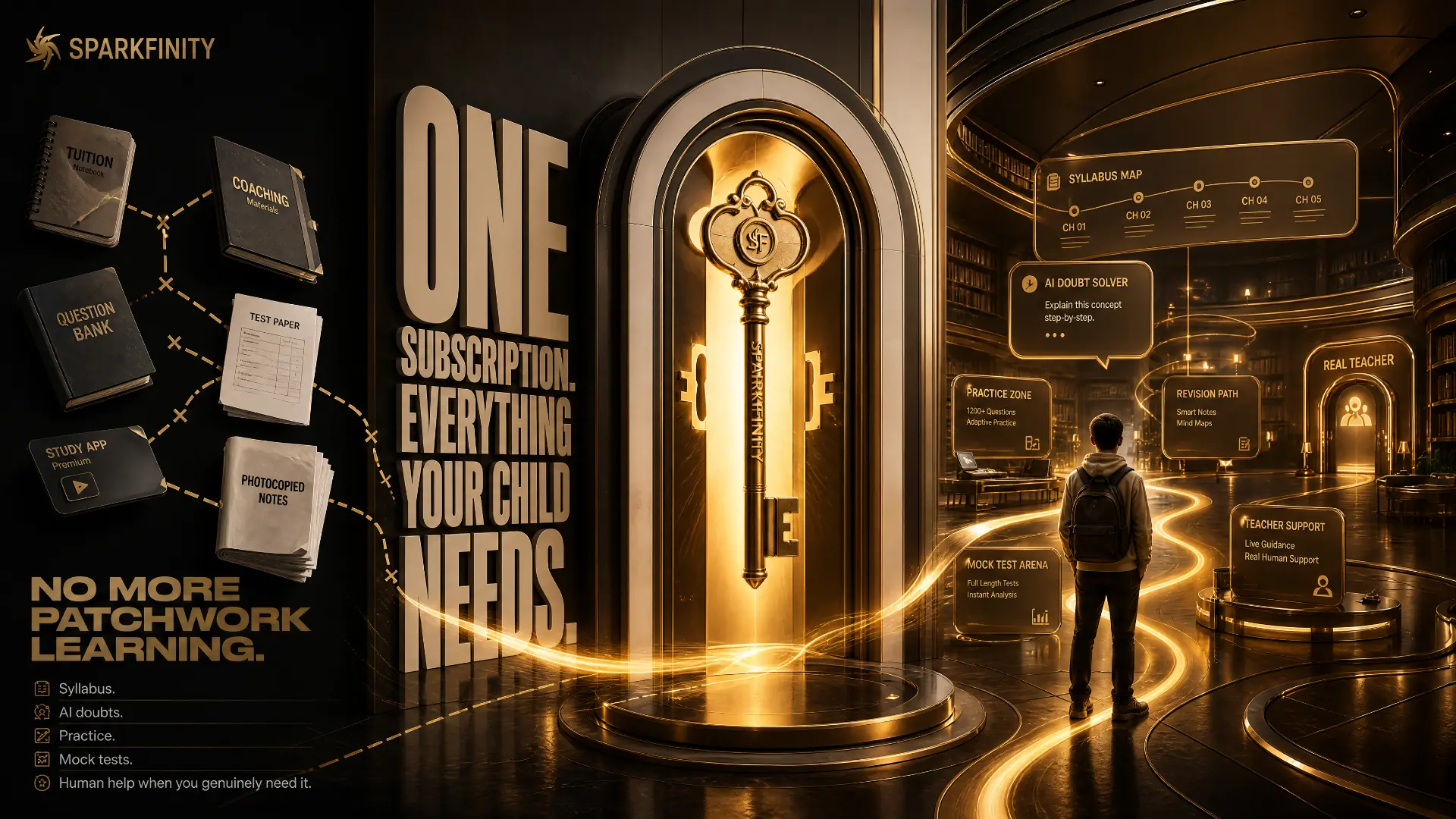
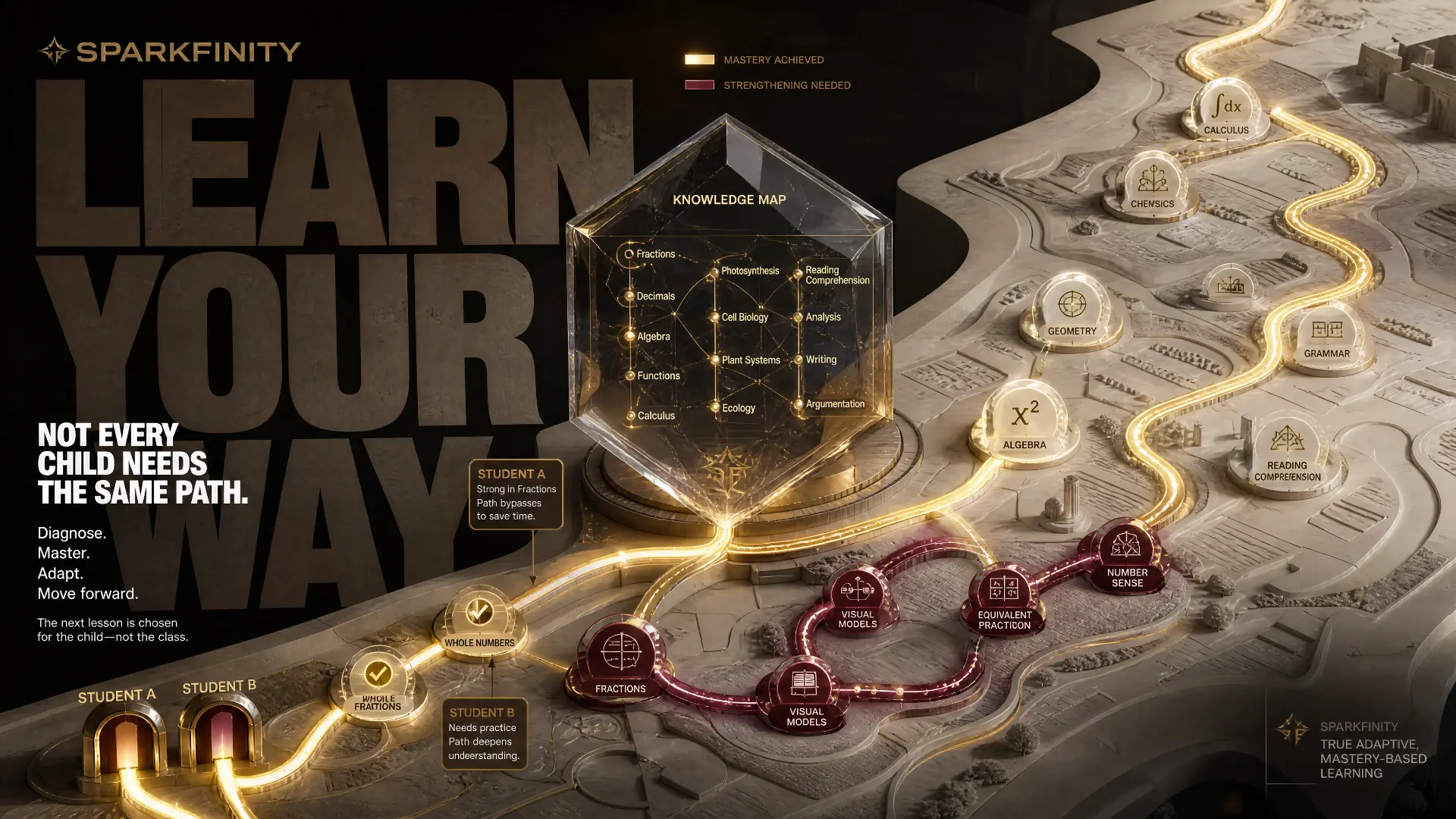
Sparkfinity's AI video lessons are specifically designed to build understanding, not just deliver information to memorise — showing the "why" behind concepts through visual, process-based explanation, paired with adaptive flashcards and varied practice questions that test genuine application, not memorised recall. It's built for the exams students are actually facing now, not the ones their parents took.
Frequently Asked Questions
Is memorisation ever a good study strategy? Yes, for genuinely fact-based content (dates, formulas, definitions) where recall matters. The issue is relying on memorisation for content that requires application and reasoning, which now makes up a significant share of CBSE exam papers.
How can a parent tell if their child understands a concept or has just memorised it? Ask them to explain the concept in their own words, or to solve a slightly modified version of a problem they've practiced. Genuine understanding survives both; pure memorisation usually doesn't.
Does the shift toward competency-based exams affect younger grades too, or just board years? The shift is broader than just board years — competency-based, application-focused teaching increasingly starts from middle school, precisely to build the reasoning skills board-year exams now test more heavily.
Is conceptual learning slower than rote memorisation initially? It can feel slower at first, since it requires deeper engagement with material rather than quick repetition. Over time, however, it tends to require less repeated re-learning, since understanding fades far more slowly than pure memorisation.
Next step
Turn this into a plan for your child.
Two live classes a week, an AI tutor that remembers every weak topic, and a weekly parent update in plain language — ₹3,999 a month.
Continue exploring
Everything on Sparkfinity AI is one or two clicks away.
- All 14 FeaturesEvery capability in the Sparkfinity learning system.Open→
- Pricing₹3,999 a month — two live one-hour AI Basics classes each week.Open→
- How It WorksDiagnose, teach, test, retest — the loop behind every class.Open→
- FAQ28 answers on classes, safety, syllabus and pricing.Open→
- Contact UsTalk to us on WhatsApp, phone or email and book a seat.Open→