Can AI Really Replace a Tuition Teacher? The Honest Answer for Indian Parents
A genuinely honest look at what AI can and can't do compared to a tuition teacher — no hype, no dismissal, just a clear-eyed answer for parents deciding what's right for their child.
5 min read · Article 11 of 20
This question comes up in almost every conversation about AI in education, and it deserves a more honest answer than either extreme usually gets offered: "AI will replace teachers entirely" or "AI can never replace a real teacher, full stop." Both are oversimplified. The honest answer is more useful, if slightly less dramatic.
Let's Start With What a Good Tuition Teacher Actually Provides
Before comparing anything, it's worth being specific about what a genuinely good tuition teacher does well, because the comparison only means something if we're honest about both sides.
A skilled tutor reads a child's confusion in real time — not just from a wrong answer, but from hesitation, frustration, or a half-formed question that reveals a specific misunderstanding. They adjust their explanation on the spot, sometimes mid-sentence. They provide encouragement at exactly the moment a child is about to give up. And for many children, a trusted tutor becomes someone they're comfortable being vulnerable with academically — admitting "I don't get this" without embarrassment.
These are genuinely hard things to fully replicate, and it would be dishonest to claim AI does all of this as well as a great human tutor does, today.
Where the Honest Limits of Tuition Are, Too
At the same time, tuition has real structural limits that have nothing to do with any individual tutor's skill:
- It's scheduled, not always-available. A child stuck on a doubt at 9 p.m. on a Wednesday usually waits until the next session, by which point the specific confusion has often faded into a vaguer "I don't really get this chapter."
- Group tuition can't fully personalise. A tutor teaching five or ten students at once, however good, is teaching to a rough average — a student who needs a completely different explanation style than the rest of the group often doesn't get one.
- Quality varies significantly, and not every family has access to genuinely excellent tutors, whether due to cost, location, or availability.
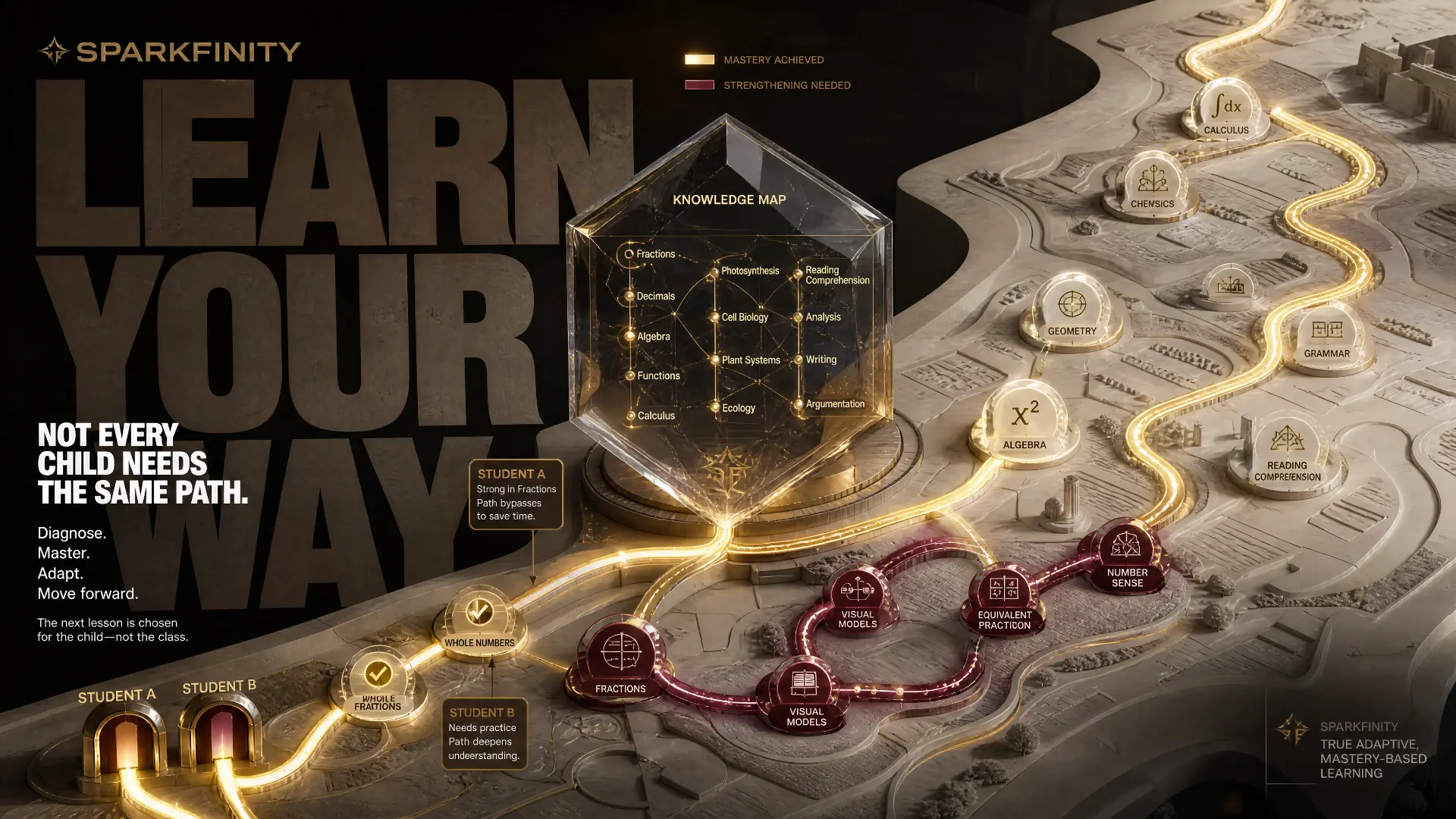
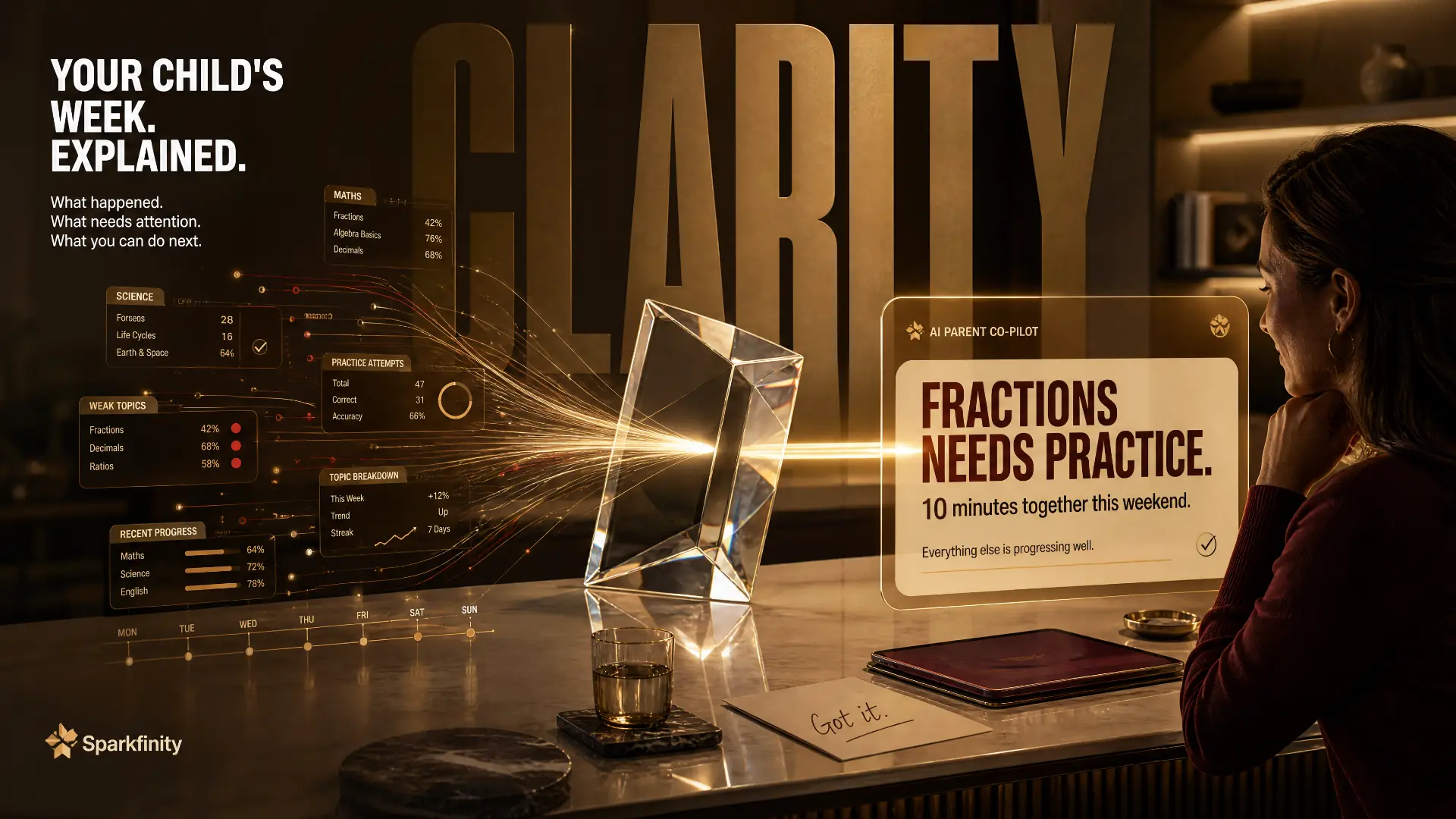
- It rarely tracks granular, longitudinal data — most tutors work from impressions and recent test scores, not a detailed, ongoing map of exactly which sub-concepts a child has and hasn't mastered.
So, Can AI Replace This? The Honest Answer Is: Not Fully, and It Shouldn't Try To
The most useful framing isn't replacement — it's division of labour, based on what each is actually good at.
AI is genuinely strong at: availability exactly when a doubt arises, patient repetition without any hint of frustration, tracking granular performance data across weeks and months, and personalising what content a specific child sees next based on that data — at a scale and consistency no single human tutor's schedule allows.
Humans remain genuinely stronger at: reading emotional and motivational cues, providing encouragement that lands because it comes from a trusted relationship, guiding open-ended thinking (essay feedback, project discussions, career guidance), and noticing when academic struggle is actually a symptom of something else entirely.
A child doesn't need to choose one or the other. The families getting the best outcomes today typically combine both — human guidance for motivation, complex discussion, and emotional support, paired with AI-led tools for the consistent, daily reinforcement that tuition schedules structurally can't provide.
A Note on How This Conversation Tends to Evolve
It's worth adding one honest caveat: the capabilities of AI tutoring tools are genuinely improving quickly, and some of the "humans are better at X" statements in this article will likely need revisiting in a few years. What's unlikely to change as fast is the value of a trusted human relationship in a child's life — motivation, emotional support, and guidance through non-academic struggles will likely remain a human strength for the foreseeable future, even as the academic-content gap between AI and human tutoring continues to narrow.
What Changes When You Stop Asking "Which Is Better"
Once the question shifts from "AI vs. tuition" to "what does my child actually need, and when," the decision gets much clearer. A child who's fundamentally motivated but needs more practice time and doubt support benefits enormously from AI-led daily reinforcement. A child who's disengaged or anxious about a subject may need the human relationship and encouragement first — with AI tools supporting the practice once that motivation is in place.
Neither replaces the other. They solve different, real problems.
A Useful Test for Any Family Weighing This Decision
Rather than debating the question in the abstract, it can help to get specific: list what your child has genuinely struggled with over the last few months. For each item, ask honestly — was this a motivation and confidence issue, or a consistent-practice-and-availability issue? Items in the first category usually benefit most from human involvement — a conversation, encouragement, a trusted relationship. Items in the second usually benefit most from consistent, always-available reinforcement — which is exactly where AI-led tools are strongest. Most families find their list has a genuine mix of both, which is itself the answer: not a single winner, but a sensible division of labour.
Where Sparkfinity Sits in This Picture, Honestly
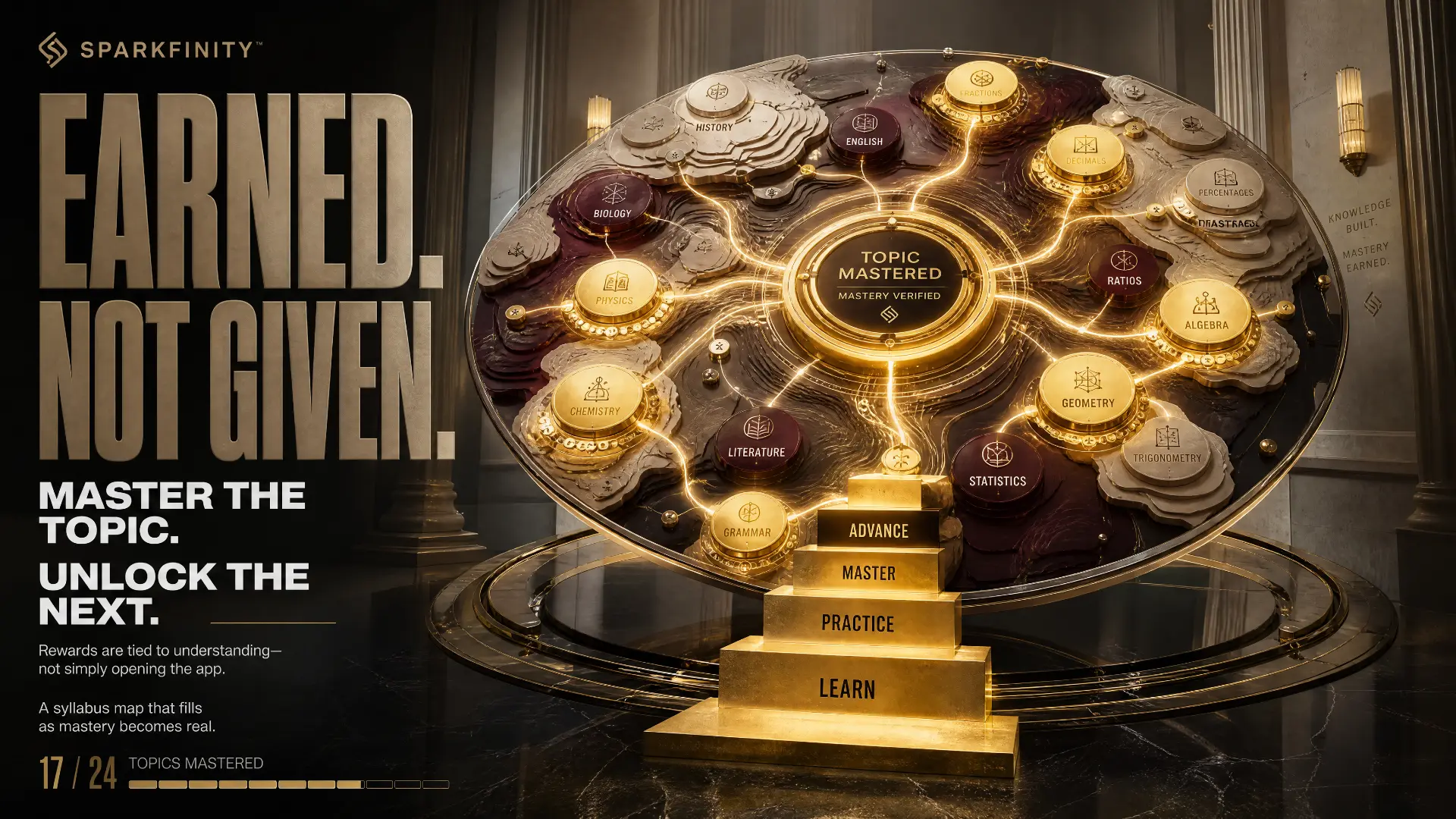
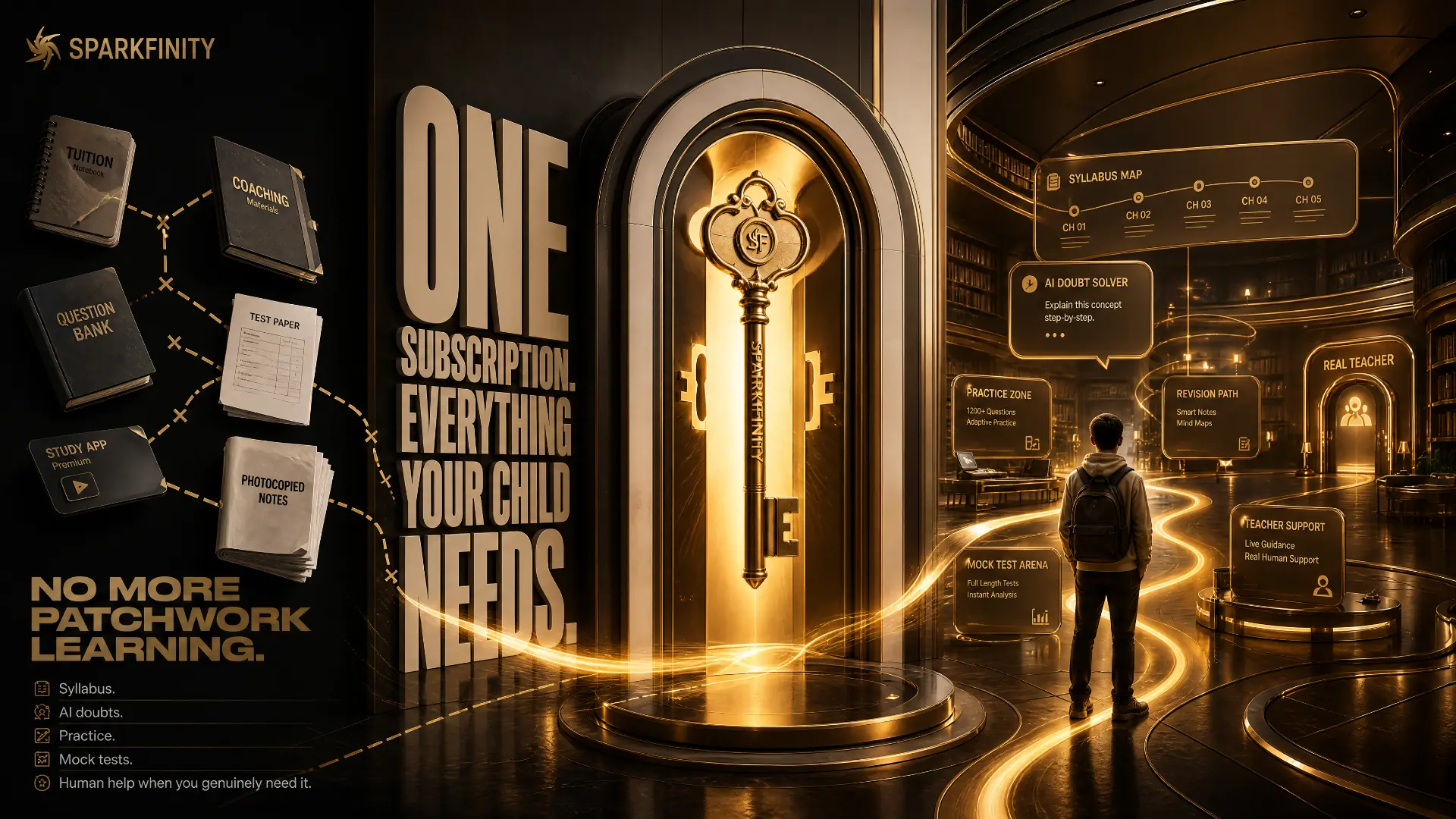
Sparkfinity doesn't claim to be a replacement for a good teacher or tutor — it's built to be the consistent, always-available layer that tuition schedules and classroom time structurally can't provide: AI video lessons, a patient voice tutor for doubts whenever they come up, and adaptive flashcards that track exactly what a child needs to revisit. It's the daily reinforcement layer, not the relationship layer — and being honest about that distinction is exactly why it works well alongside a good tutor, not instead of one.
Frequently Asked Questions
Should a family drop tuition entirely if they start using an AI learning app? Not necessarily — many families find AI tools and tuition serve complementary roles rather than competing ones, particularly for consistent daily practice versus scheduled human guidance.
Is AI-led learning less effective for children who struggle with motivation? It can be, if used entirely without human involvement — motivation issues often need a trusted relationship first, with AI tools supporting the practice once engagement is in place.
Do AI tutors understand a child's specific doubts, or just give generic answers? Well-designed AI tutors are built to respond to a child's specific question and context, not just deliver a pre-recorded generic explanation — though the quality varies significantly between platforms.
Is it emotionally healthy for a child to rely on an AI tutor for learning support? Used as a learning tool for academic content — not as a substitute for human relationships and emotional support — AI tutoring is generally a healthy, practical addition to a child's learning routine.
Next step
Turn this into a plan for your child.
Two live classes a week, an AI tutor that remembers every weak topic, and a weekly parent update in plain language — ₹3,999 a month.
Continue exploring
Everything on Sparkfinity AI is one or two clicks away.
- All 14 FeaturesEvery capability in the Sparkfinity learning system.Open→
- Pricing₹3,999 a month — two live one-hour AI Basics classes each week.Open→
- How It WorksDiagnose, teach, test, retest — the loop behind every class.Open→
- FAQ28 answers on classes, safety, syllabus and pricing.Open→
- Contact UsTalk to us on WhatsApp, phone or email and book a seat.Open→